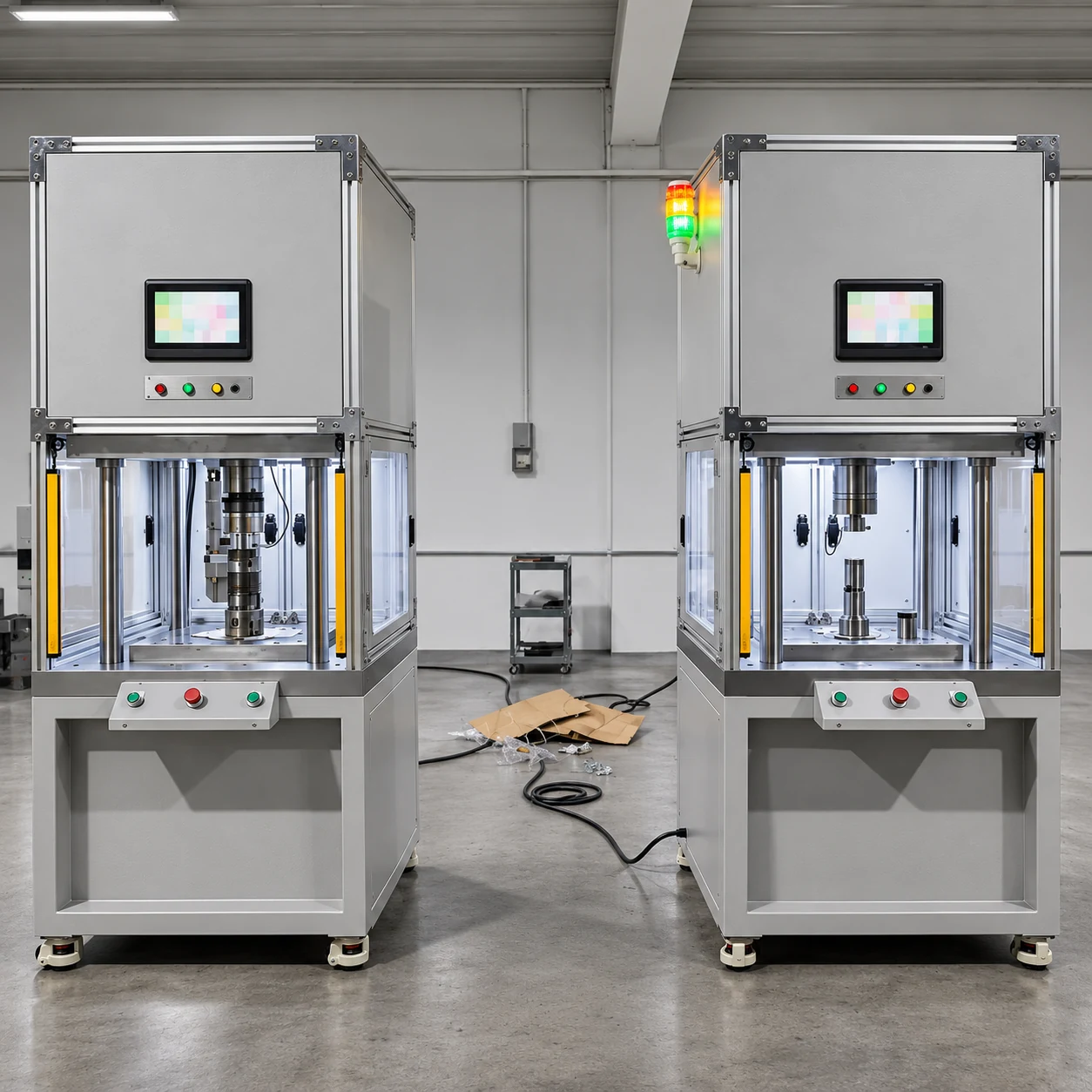
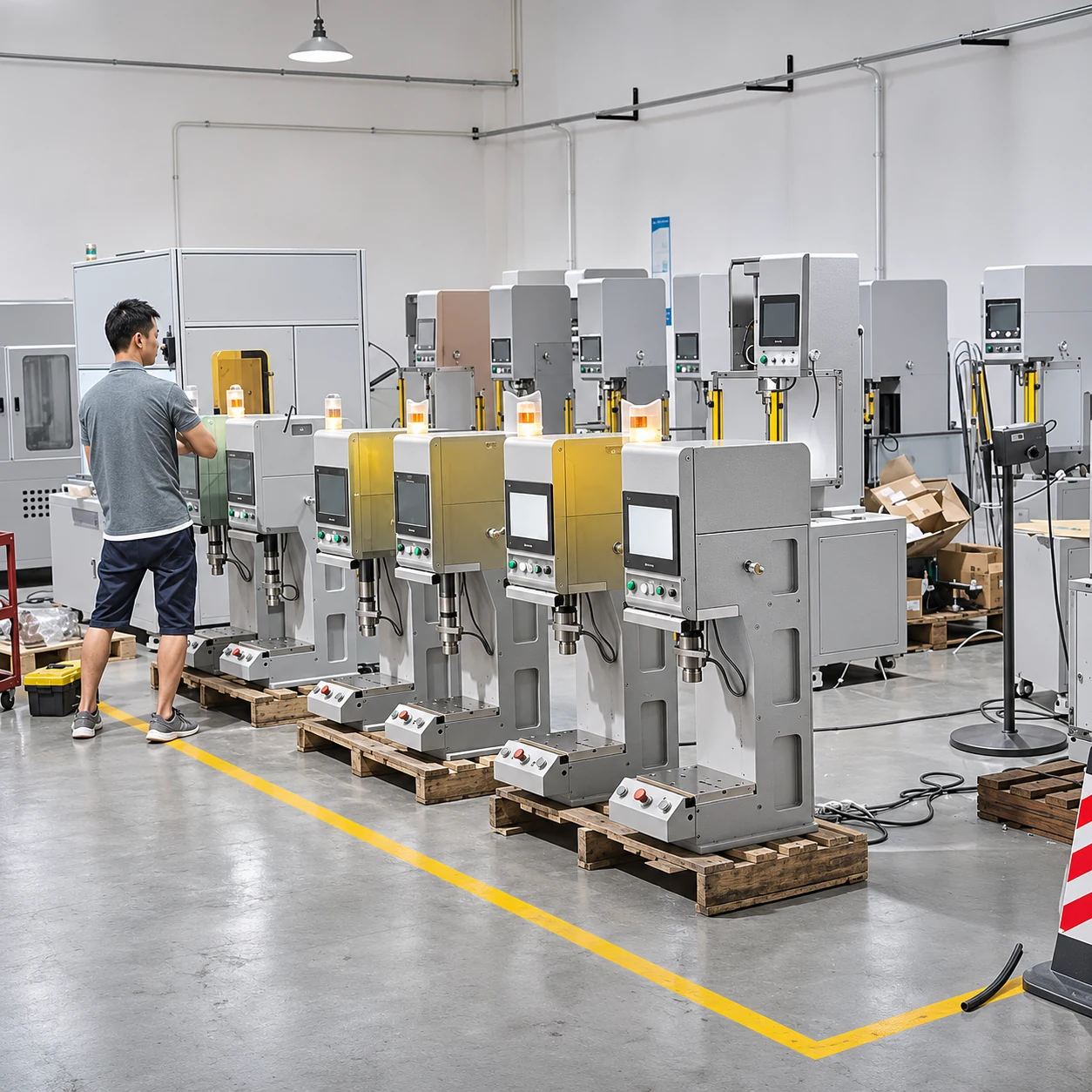
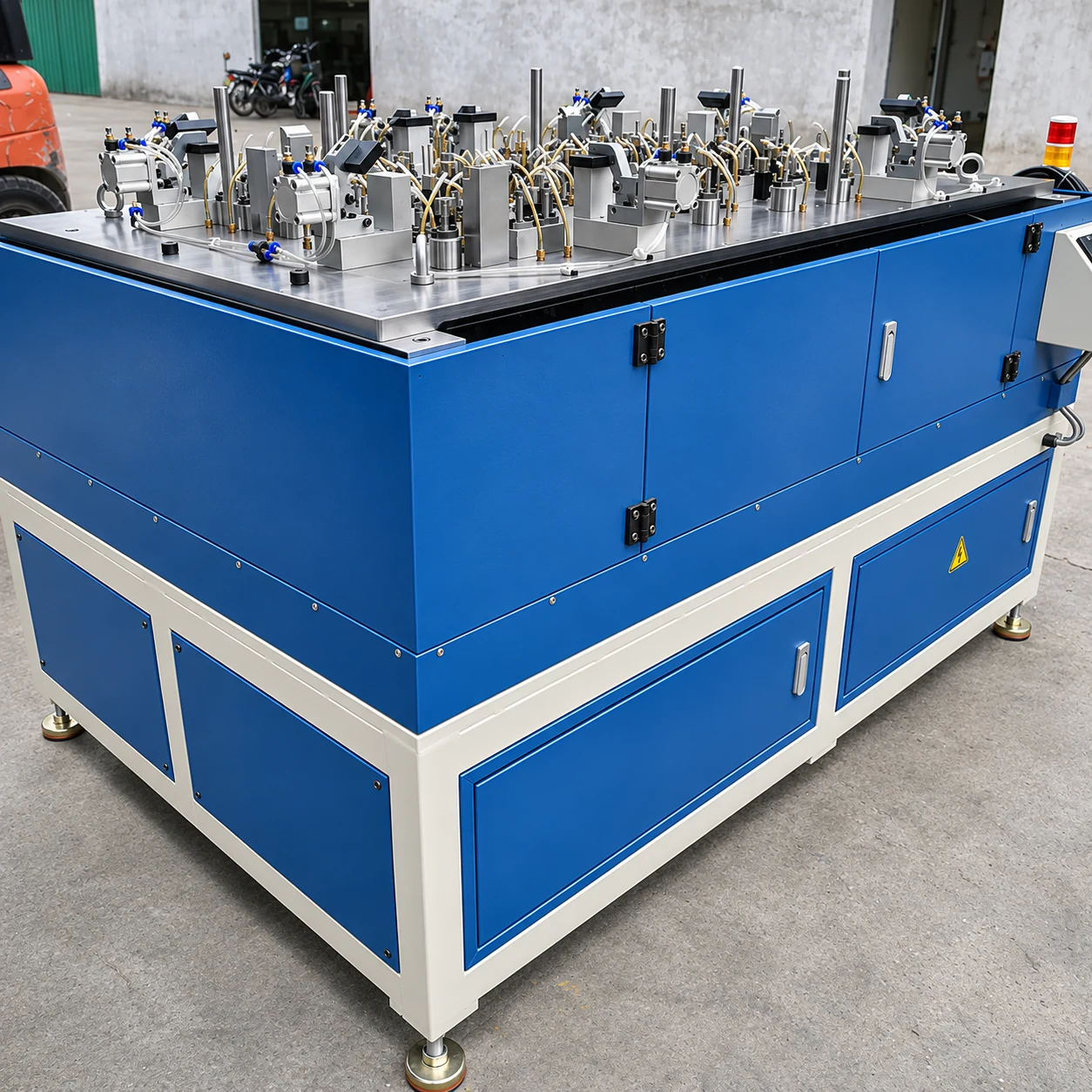
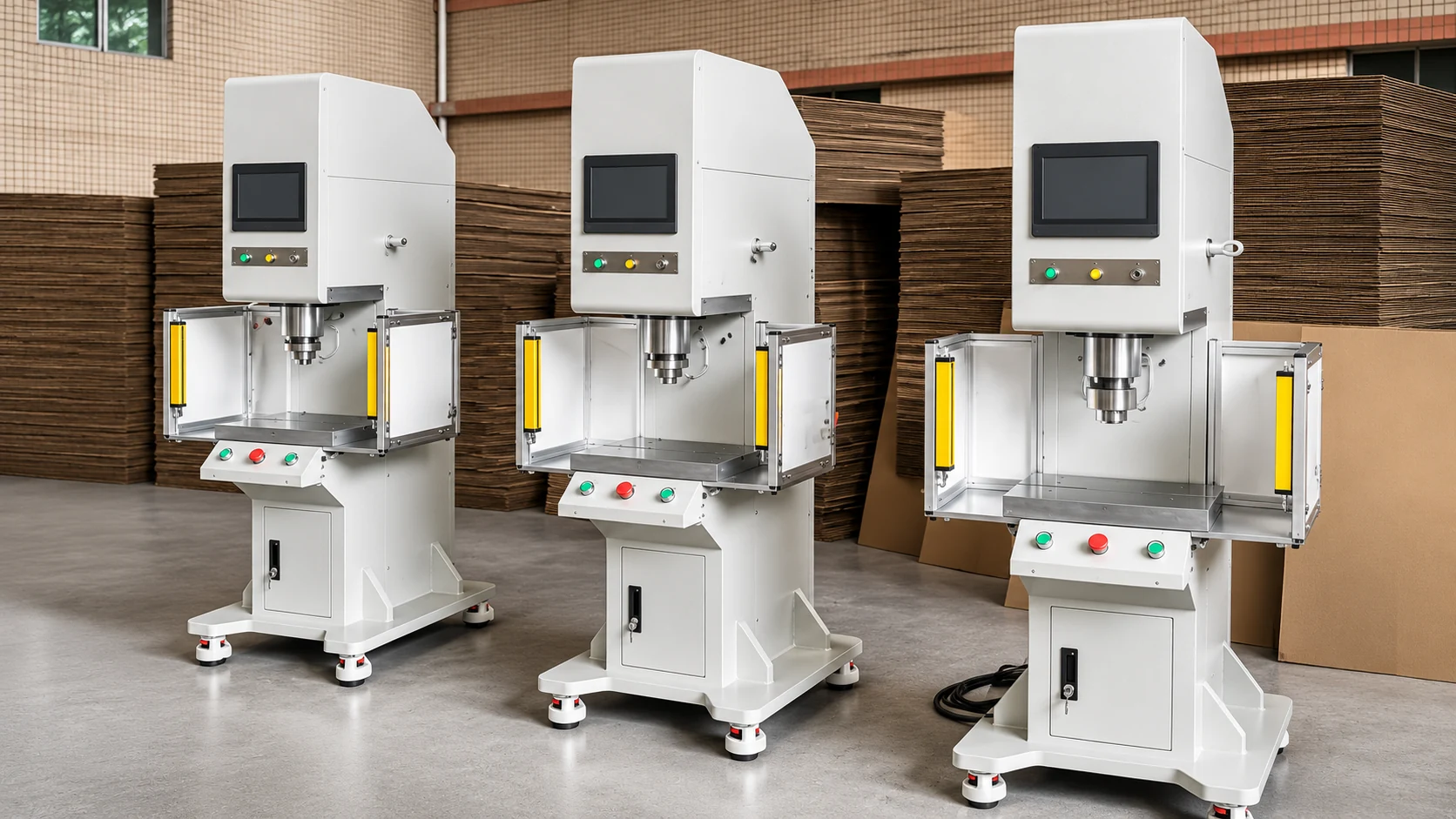
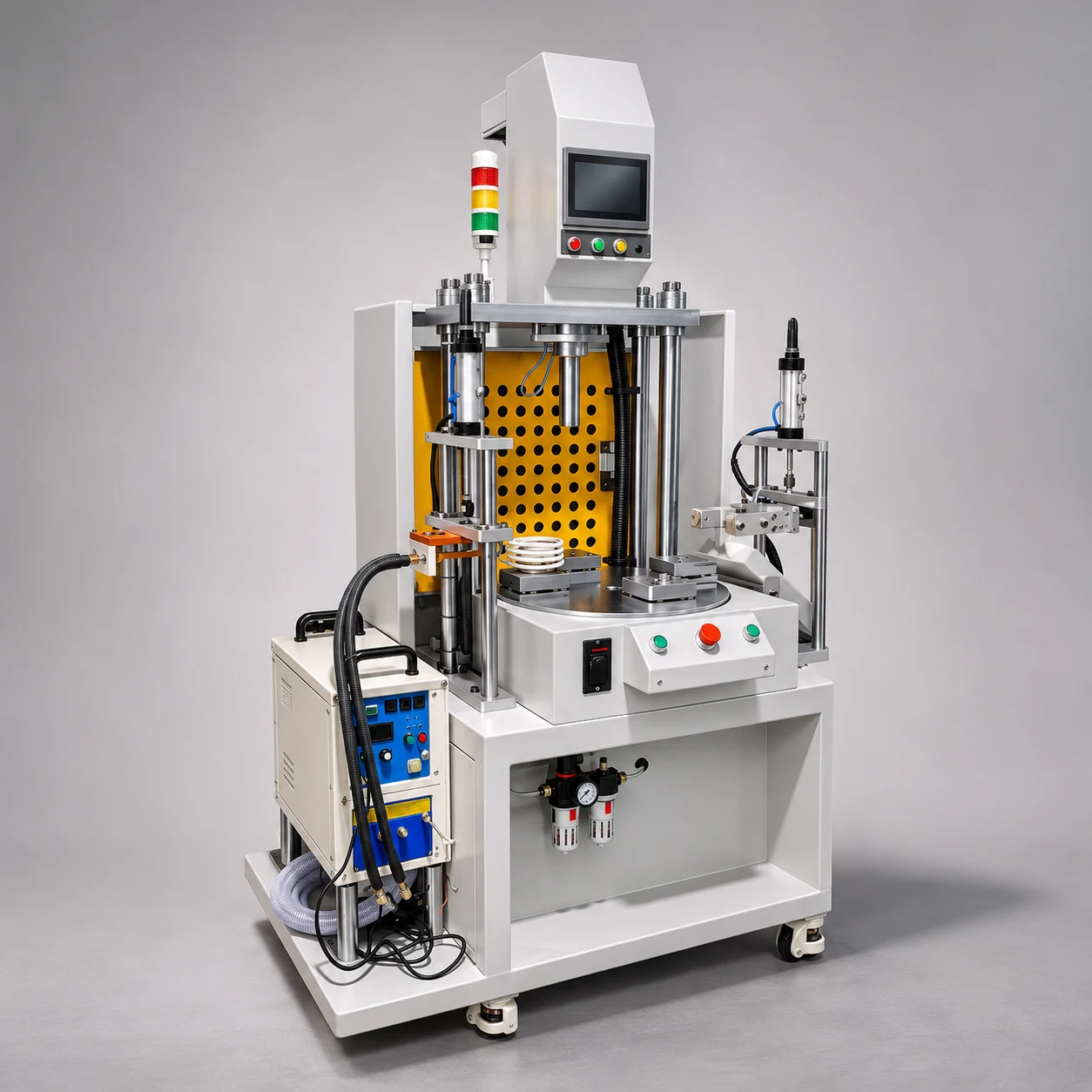
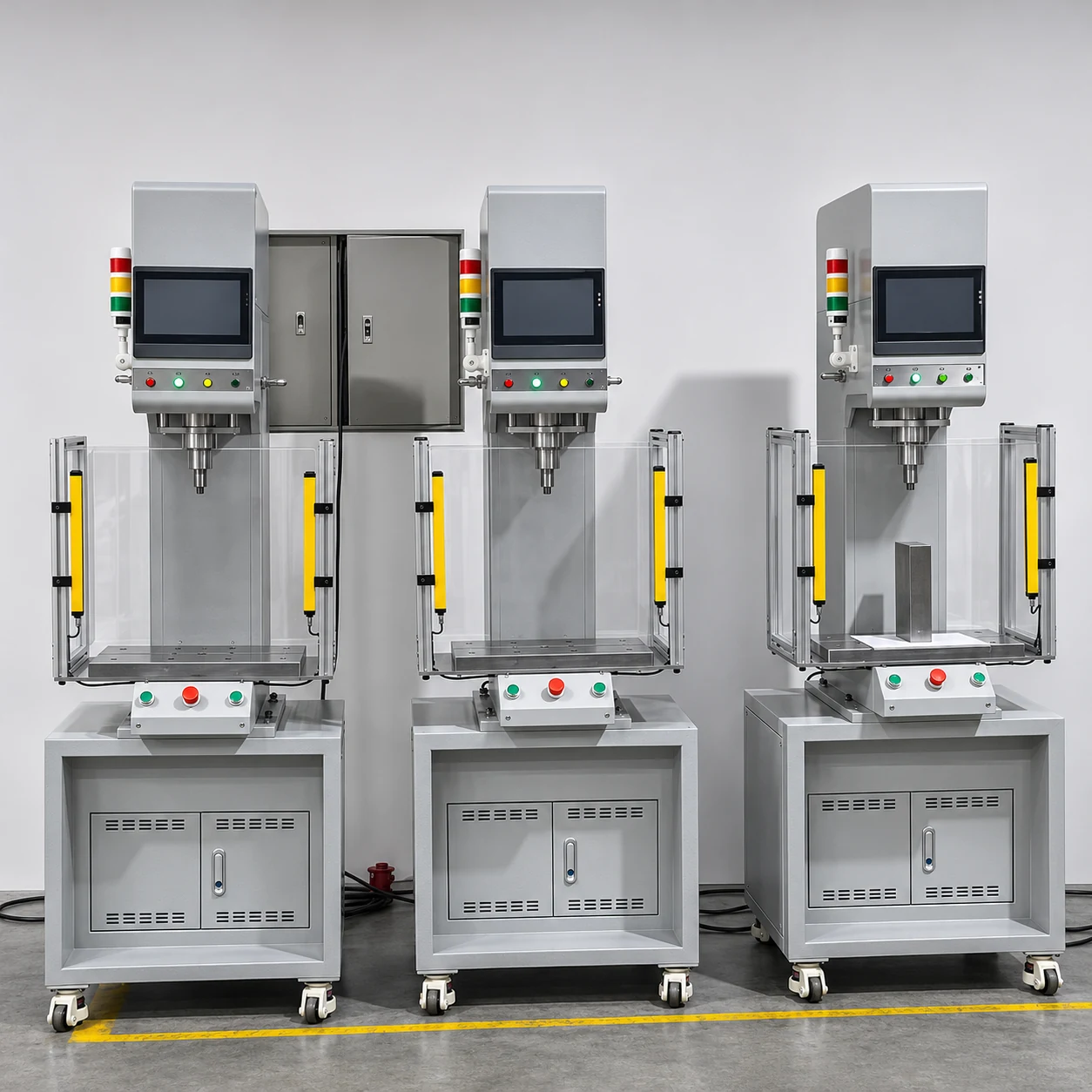
Force–displacement monitoring records the relationship between applied load and press travel. It can show whether a cycle stays inside a validated process window, but it does not replace all end-product inspection.
Build a meaningful process window
- Collect representative acceptable parts across normal tolerance and material variation
- Test controlled fault samples such as missing parts and tilted assemblies
- Define contact position, travel bands, force limits and final depth
- Verify sensor calibration, resolution, sampling rate and fixture compliance
- Document false accepts and false rejects; revalidate following a product change
Two parts with the same peak force may have different installation histories, while acceptable parts naturally show some variation. Combine curve monitoring with drawings, dimensional inspection and functional tests. Store part identification, recipe version and inspection result for traceability where required.
This article is general engineering guidance. Machine functions, performance and acceptance criteria must be confirmed against representative samples and the specific project agreement.
Discuss an application with BRUNSK. You may share appropriate drawings, materials, target force, stroke, cycle time and inspection requirements.