

What is a servo press and how does it work?
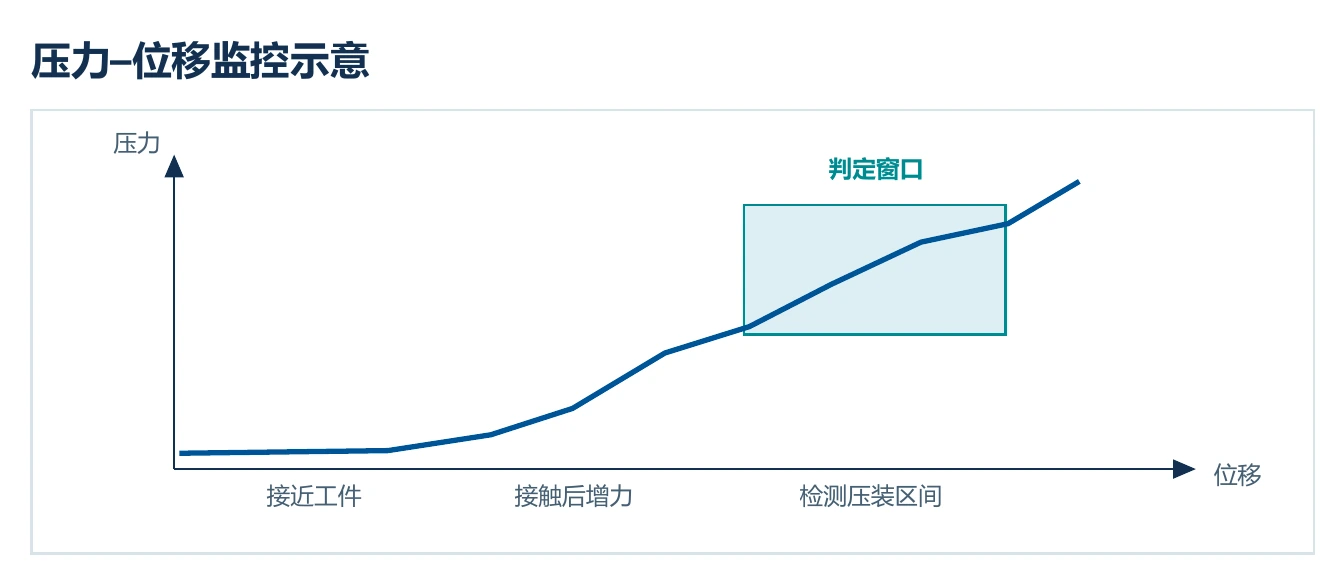
An electric servo press for precision assembly uses a servo motor to move the ram in a straight line. The program controls the press cycle by position, speed, or force. If the station measures both force and displacement, its controller can record a trace for each cycle.
- Locate and approach. Place the part against the fixture datums and detect the contact position.
- Press and stop. Press at the speed established in trials and stop at the specified depth or force. Add a dwell if the process requires it.
- Review the trace and inspect the part. Compare contact position, peak force and final depth with the agreed process window. Verify final dimensions or function against the drawing.
Compare reference configurations
| Configuration | Maximum force | Maximum stroke | Worktable | Head-to-table clearance |
|---|---|---|---|---|
| 3T C-frame | 3,000 kgf (≈29.4 kN) | 200 mm | 350 × 290 mm | 300 mm |
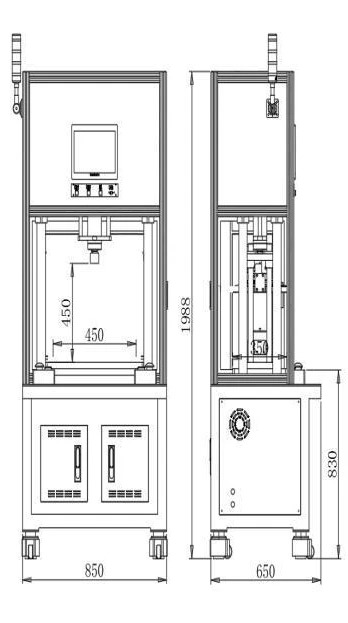
| 30 kN four-column | 30 kN | 200 mm | 450 × 350 mm | 450 mm |
Reference values apply to the configurations shown. Confirm final machine and tooling specifications in the project agreement.
Application guides
Common selection questions
How do I size a servo press?
Start with a part drawing and tolerance stack. Use sample trials to establish the force range, and allow room for fixtures, part loading and changeovers.
What does force–displacement monitoring verify?
Review contact, peak force and end position. Define a process window using representative samples and check it against approved and abnormal parts.
What data should I send for a quotation?
Share the part material, fit dimensions, target depth or force, cycle time and preferred loading method. Include any I/O or MES requirements.